
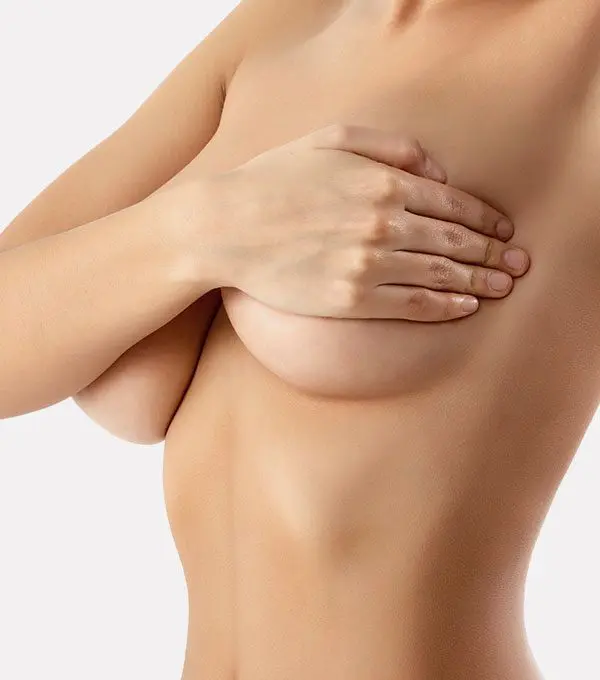
Breast enlargement, also known as augmentation mammoplasty or a boob job, is one of the most common plastic surgery procedures performed today. Personally tailored procedures are available from botonics at our prestigious Harley Street clinic, in the heart of London’s premier private medical community.
Over time, age, genetics, pregnancy, and weight changes can all affect the size and shape of the breast. During breast enlargement, an implant is placed inside a pocket formed in the breast tissue to increase volume, restore shape, or improve symmetry.
It is important to understand that breast augmentation cannot correct significantly sagging or drooping breasts. In these cases, a breast lift is often necessary and may be performed alongside this procedure.
Breast enlargement is suitable for women who are in good general health, have realistic expectations, and are looking to increase or restore breast volume. It is a body-enhancing procedure rather than a solution to significant sagging, which is better addressed through a breast lift.
The following are contraindications:
If you are unsure whether you are a suitable candidate, a consultation with one of our specialist surgeons at our Harley Street clinic is the right place to start.
Implant choice is one of the main things you will work through at your consultation. Three decisions sit at the centre of it, each based on your anatomy, your goals, and the result you want.
Implant material
Cohesive silicone gel implants are the standard choice for breast augmentation. Modern cohesive gel holds its shape well and tends to feel natural. Your surgeon will explain which implants suit your anatomy and what you are hoping to achieve.
Implant shape
Round implants add volume more evenly across the breast, creating greater fullness in the upper pole. Anatomical implants, sometimes called teardrop implants, are fuller at the base and taper towards the top, creating a more gradual, natural-looking slope. The right choice depends on your existing breast tissue, your frame, and the overall shape you want.
Implant placement
Implants can be placed either above the chest muscle (sub-glandular) or beneath it (sub-muscular). Placement under the muscle is often preferred for women who are slim or have relatively little natural breast tissue, since the muscle provides additional coverage and may help reduce implant visibility. Your surgeon will assess which approach is appropriate for you during consultation.
Consultation and Planning
Your journey begins with a consultation with your botonics consultant plastic surgeon. They will assess your anatomy, discuss your goals, walk you through implant options, and confirm whether surgery is the right route for you. Your treatment plan, including implant type, size, shape, and placement, is agreed at this stage. Nothing is decided without your full understanding and consent.
Preparation
On the day of your procedure, the treatment areas are marked and anaesthesia is administered. Breast enlargement at botonics is performed under sedation or general anaesthetic, so you will be comfortable and unaware throughout. The procedure itself typically takes one to two hours.
The Procedure
Your surgeon creates a small incision, forms a pocket in the breast tissue, and places the implant in the agreed position, either above or below the chest muscle. The incision is then carefully closed. Our surgeons work to minimise scarring and achieve a balanced, proportionate result.
Recovery and Aftercare
Once the procedure is complete you will be helped into a post-operative support bra, which should be kept on as advised by your surgeon. Most patients are able to go home the same day or after one night. Your botonics team will arrange follow-up appointments to monitor your progress and answer any questions during your recovery.
Recovery is easier to plan for when you know what each stage involves.
Days 1 to 2: Rest at home and give yourself time to recover. You will be wearing a post-operative support bra, which should be kept on as advised by your surgeon. If surgical drains have been used, these are typically removed before you leave the clinic or within the first couple of days.
Week 1: Most patients can return to desk-based work within a week. You should not drive during this time, particularly while taking prescription pain relief.
Weeks 2 to 4: Gentle walking is encouraged to support circulation. Avoid lifting heavy items, including children and shopping bags, until your surgeon confirms it is safe to do so.
6 weeks: Most patients are cleared to return to the gym and resume regular exercise at their six-week follow-up appointment.
3 to 6 months: Your implants will gradually settle into their final position, and any scarring continues to soften and fade.
What patients say
Having met with Dr Joffily for my free consultation I felt confident I had chosen the best cosmetic surgery group and surgeon for me. Dr Joffily and his team, including Patient Coordinator…
Patient review
My experience having a breast enlargement (under the muscle) with Dr. Joffily through Botonics was great. I was very nervous beforehand, and Bill was a reassuring comforting voice throughout the process. In…
Patient review
I live in Spain and researched my surgery options online. I was looking for a breast augmentation but a natural result, and a butt lift using vaser lipo. I found the Botonics…
Patient review
I had been thinking bout having a breast enlargement for a while and had never had plastic surgery before. After having my 3 children I wasn't happy with my boobs and was…
Patient review
I checked in for my procedure at the hospital at 8am and my procedure was scheduled for 10am. In the waiting room I saw my surgeon and gave him a quick hug…
Patient review
I received a fantastic service from Botonics who provided me with Breast Augmentation and Upper Blepharoplasty. Bill provided me with flexible appointments, friendly efficient service & no pressure transparent costings. The consultation…
Patient review
As with any surgical procedure, it is important to understand the risks before going ahead. Our surgeons take every reasonable step to minimise them.
Rated 5 out of 5 by 6 Breast Enlargement (Augmentation) London patients Read all reviews
Treatment Summary
Procedure time
1 - 2 hours
Anaesthetic
Sedation or General
Hospital stay
0 - 1 nights
Sensitivity period
0 - 1 nights
Back to work
1 week
Duration of results
Permanent
Risks & complications
Scarring, bruising, swelling, infection, asymmetry, capsular contracture.
Location
Next step
Ready to take the next step? Book a consultation with one of our specialist surgeons at our Harley Street clinic and find out whether breast enlargement is right for you. Your consultation will confirm the full cost based on our published pricing.
Book a ConsultationOr call +44 (0) 20 800 400 30
Common questions
Most women with breast implants are able to breastfeed successfully. It depends largely on the surgical technique used, particularly the incision site and how the implant is placed. Your surgeon will discuss any factors relevant to your anatomy and future plans during consultation.
Modern breast implants are not considered lifetime devices, but many women keep theirs for 10 to 20 years without any problems. There is no set expiry date. Replacement is only necessary if you experience a complication such as rupture or capsular contracture, or if you decide you would like to change the size.
Round implants add fullness more evenly across the breast and tend to create greater projection in the upper pole. Anatomical implants follow the natural slope of the breast, with more volume towards the bottom. Which suits you depends on your existing breast tissue, body proportions, and the result you want. Your surgeon will guide you through the options at consultation.
Yes. If you have some degree of sagging alongside a loss of volume, a breast lift and augmentation can be performed together in a single procedure. Your surgeon will assess your tissue and degree of ptosis during consultation and explain whether this approach is suitable for you.
Capsular contracture happens when the scar tissue that naturally forms around an implant tightens and hardens, causing the breast to feel firmer or change shape. Mild cases are often monitored. More significant contracture may require surgical release or implant replacement. Choosing an experienced surgeon and following your aftercare guidance can help reduce the likelihood of it occurring.
Most patients notice a clear improvement within the first few weeks as swelling begins to settle. It typically takes three to six months for the implants to drop into their final position and for swelling to fully resolve.
Sign up to our Newsletter receive regular updates

Explore Treatments
© botonics Plastic Surgery Group 2005 - 2026. All Rights Reserved.
Accreditations


