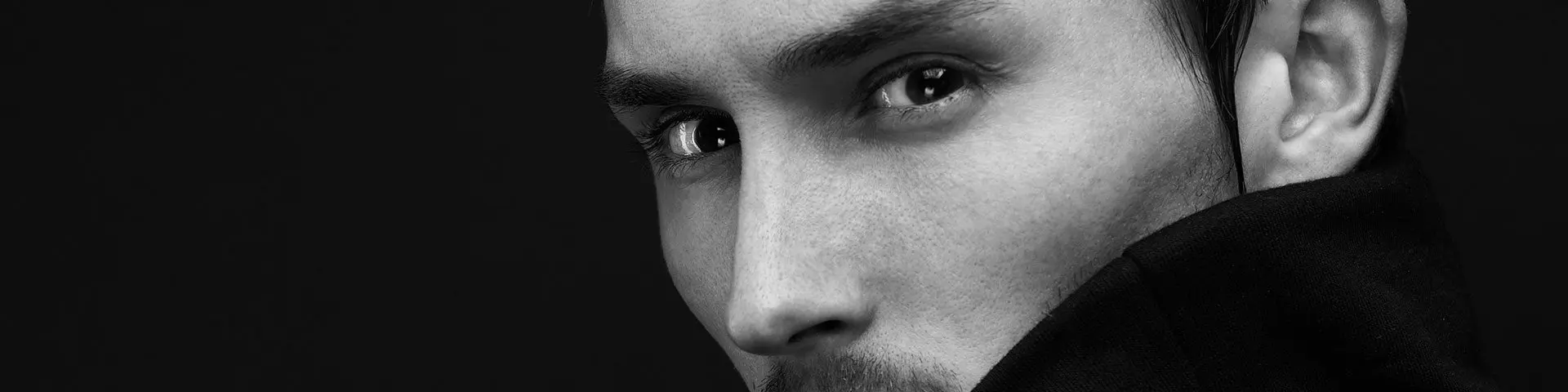

A male nose job is a surgical procedure that reshapes the nose to create a straighter, stronger profile in keeping with male facial proportions. It can also correct functional issues such as breathing difficulties. At botonics, we offer male rhinoplasty through our Harley Street clinic in London, with each procedure planned around your individual bone and cartilage structure and aimed at a natural, masculine result.
Your surgeon will assess which of these concerns apply to you and explain what can realistically be achieved during your consultation.
Rhinoplasty for men uses the same surgical techniques as the procedure for women, but differences in anatomy and aesthetic goals affect how each is planned. Men typically have thicker, oilier skin over the nose, which can take longer to settle after surgery and affects how visible fine adjustments to the tip and bridge will be.
The aesthetic goals differ too. A subtle, slightly convex bridge is often considered attractive on a male nose, whereas the same profile might be softened during female rhinoplasty. Over-refining a male nose can make it look disproportionately small or feminised in relation to the rest of the face. That’s why every male rhinoplasty is planned around your individual facial proportions. A standard aesthetic template won’t give you a nose that suits your face.
A nose job for men may be suitable if you’re in good overall health, your nasal growth is complete and you have realistic expectations about what surgery can achieve.
The following are contraindications:
If you’re unsure whether rhinoplasty is right for you, a consultation with one of our surgeons at our Harley Street clinic is the place to start.
Consultation
You’ll meet with the Consultant Plastic Surgeon who will perform your procedure. They will assess your nasal anatomy, discuss what’s bothering you and explain what can realistically be achieved. You’ll have the opportunity to ask questions and understand your options before deciding whether to proceed.
Preparation
Rhinoplasty is performed under general anaesthetic. You’ll receive clear pre-operative guidance, including advice on medications and smoking.
The Procedure
Your surgeon reshapes the bone and cartilage to achieve the agreed result, working to preserve or restore normal breathing function alongside the aesthetic changes. The procedure typically takes one to two hours.
Recovery and Aftercare
Most patients go home the same day or after one night. A splint protects the nose while it heals, and your botonics team will arrange follow-up appointments to monitor your recovery.
Everyone heals at a different pace. Your botonics surgeon will give you a recovery plan tailored to your individual procedure.
What patients say
My eventful journey to bontonics group started with a telephone call and a friendly voice came through to answer my call, this relaxed me and a prompt appointment followed. My subsequent meeting…
Patient review
I have been attending appointments with botonics for around four years. I always have a very good service. from booking through to aftercare or just advice they will always try to help.
Patient review
first off all the staffs were really friendly and helpful as well as well knowledgeable. they were helpful since day one till my last contact with them. service and the results I…
Patient review
Read all 3 Rhinoplasty for Men in London (Male Nose Job) reviews
Every surgical procedure carries risks. Your surgeon will explain these carefully during your consultation so you have the information you need to make an informed decision.
Treatment Summary
Procedure time
Anaesthetic
Hospital stay
Sensitivity period
Back to work
Duration of results
Risks & complications
Location
Your Specialist(s)
Next step
If you're considering a male nose job, book a consultation with one of our surgeons at our Harley Street clinic. You'll be able to discuss your concerns, understand your surgical options and find out whether rhinoplasty is right for you. Full pricing is available on our rhinoplasty prices page.
Book a ConsultationOr call +44 (0) 20 800 400 30
Common questions
The surgical techniques are the same, but the goals and priorities usually differ. Your consultation focuses on how much to change and how much to preserve. Avoiding over-correction towards a smaller, more delicate nose is often a greater concern in male rhinoplasty than under-correction.
A well-planned rhinoplasty should sit in proportion with the rest of your face. Your surgeon will discuss the result you’re aiming for during your consultation, with the goal of a nose that suits your features and doesn’t look conspicuously “done”.
Most visible swelling settles within a few weeks, but finer swelling, particularly at the tip, can take up to a year to resolve fully. Your surgeon will explain what to expect at each stage during your consultation.
Yes. When a deviated septum or another structural issue is contributing to breathing difficulties, it can often be addressed alongside the cosmetic changes during the same procedure.
Most patients return to desk-based work within around three weeks. Strenuous exercise and contact sports should be avoided for several weeks longer, and your surgeon will confirm the timing based on your individual recovery.
Sign up to our Newsletter receive regular updates

Explore Treatments
© botonics Plastic Surgery Group 2005 - 2026. All Rights Reserved.
Accreditations


