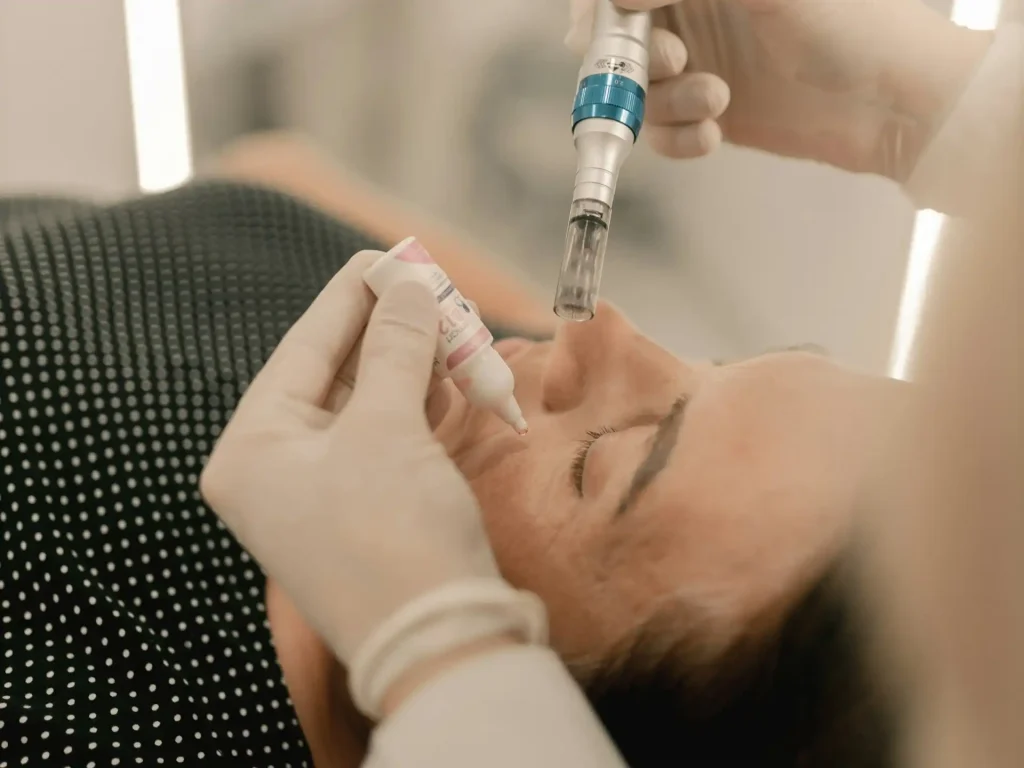
Lines, hollows, bags and dark circles can all sit in exactly the same spot beneath the eye, which is why these two treatments get confused so often. They work in completely different ways, and choosing the wrong one is one of the most common reasons people end up disappointed with the result.
Under-eye Botox relaxes muscle movement, so it softens creasing that appears when you smile or squint. Tear trough filler adds volume, so it fills a hollow and softens the shadow it casts. One changes movement, the other changes contour, and neither can do the other’s job.
Key Takeaways
- Under-eye Botox treats dynamic lines caused by muscle movement. It does nothing for hollows, bags or pigmentation.
- Tear trough filler adds volume to soften a hollow and the shadow it casts. It does nothing for lines caused by muscle movement.
- Many people have some of both and benefit from combining the two treatments.
- Botox results show within three to five days, settle at two weeks, and last three to four months. Filler results are visible immediately once swelling settles, and typically last 8 to 12 months.
- Under-eye Botox is off-label in the UK and US, since licences cover frown lines, crow’s feet and forehead lines specifically.
- Both treatments require careful assessment first. The wrong choice for your anatomy can make bags or hollows look more obvious rather than less.
What’s Actually Causing Your Under-Eye Concern?
The area beneath the eye can look tired for several different reasons, and telling them apart is the first step to choosing the right treatment.
Dynamic lines (crinkling when you smile or squint): caused by the orbicularis oculi muscle contracting. Look relaxed at rest and mostly or fully disappear when your face is still. This is what Botox is designed to treat.
A hollow or dark shadow (the tear trough): a groove between the lower eyelid and cheek, caused by lost volume, thinning skin or bone changes with age. It looks similar whether your face is moving or still, because it’s a structural dip rather than a muscle movement. This is what filler is designed to treat.
Puffy fat pad bags: caused by fat bulging forward, sometimes with weakened supporting tissue. Neither Botox nor filler corrects bulging fat; this is usually a surgical concern (blepharoplasty) rather than an injectable one.
Dark circles from pigmentation: caused by skin tone or thinness rather than shape. Neither treatment lightens pigment.
A simple test: look at the area with your face relaxed, then smile naturally. If creasing appears with the smile and disappears at rest, that’s dynamic wrinkling and Botox is the right tool. If the area looks the same whether you’re smiling or still, and what you’re seeing is a shadow or dip rather than a line, that points to volume loss and filler.
Many people have a mix of both, movement-related creasing and volume loss, and in those cases combining the two treatments often gives the best result.
How Under-Eye Botox Works
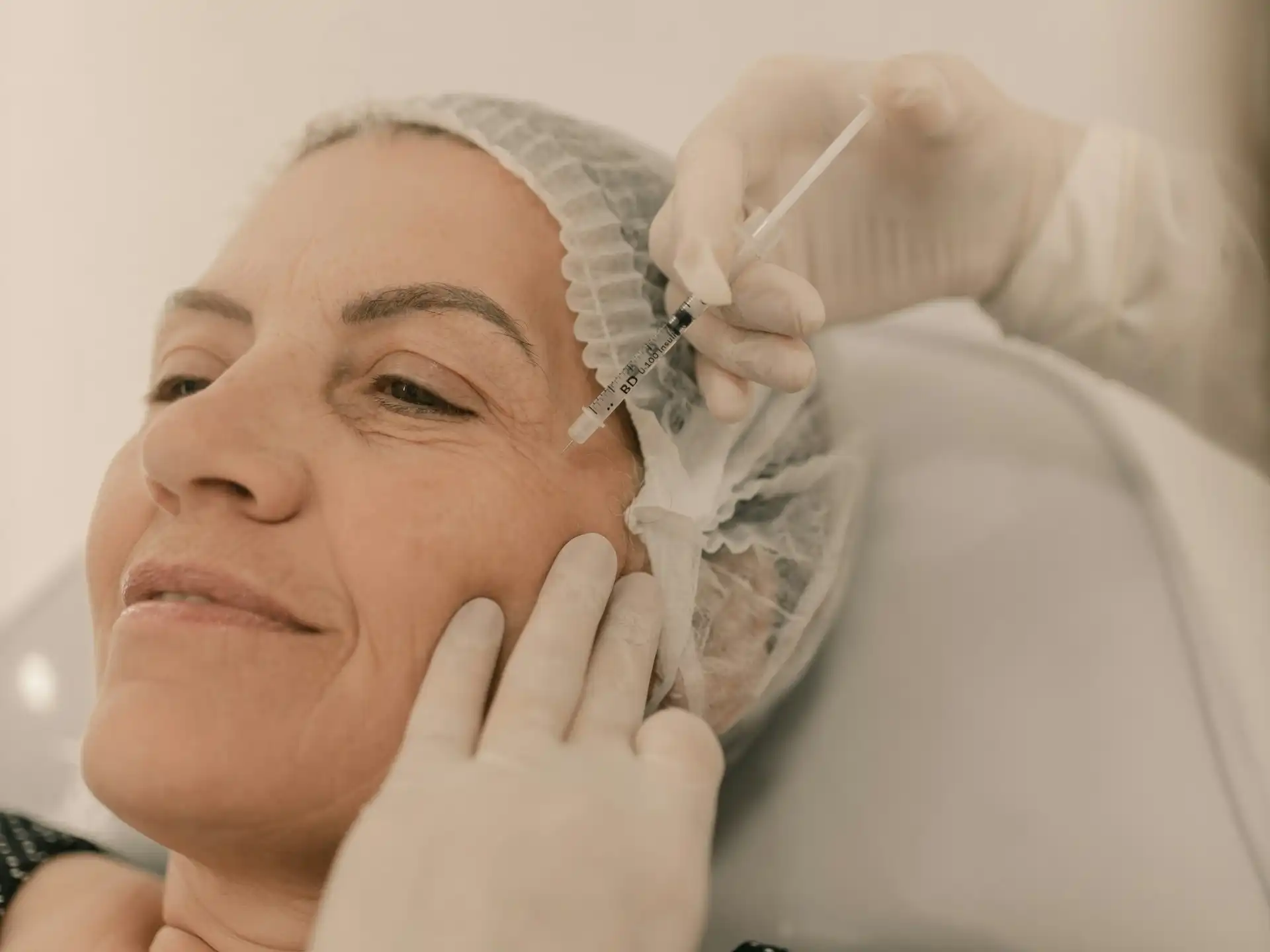
Wrinkle relaxing injections work by blocking the nerve signal that tells a muscle to contract, so the muscle pulls less strongly and the skin over it doesn’t fold as sharply when you smile or squint. It works on dynamic wrinkles specifically. Static lines, ones already visible when your face is completely still, can soften a little once the muscle relaxes, but Botox can’t remove a line that’s become etched into the skin itself.
It does nothing for hollows, fat pad bags or discolouration, because those aren’t caused by muscle movement. It’s the same active ingredient used on the forehead or between the brows, but under the eye the skin is thinner and the muscle is finer, and that same muscle also helps support the lower eyelid, so small, carefully placed doses are used rather than a standard forehead approach.
Licensing: Botox’s UK and US licences cover frown lines, crow’s feet and forehead lines. Injecting directly beneath the eye isn’t included, which makes it off-label in both markets.
Who it isn’t suitable for: pregnant or breastfeeding patients, anyone with a neuromuscular condition such as myasthenia gravis, and anyone with an active infection at the injection site.
How Tear Trough Filler Works
Our tear trough filler treatment uses Restylane, a hyaluronic acid filler placed deep beneath the skin, close to the bone, using a blunt cannula technique. This deep placement reduces the risk of surface lumpiness and produces a smooth, natural-looking result. An enhancement typically requires 2.0ml or more, with the amount discussed at consultation. In less than 5% of cases a fine needle is used instead of a cannula for more precise placement.
Filler works by physically replacing lost volume, levelling the hollow so the shadow it casts is reduced or removed. It doesn’t affect muscle movement at all, so it won’t soften a dynamic line that appears only when you smile.
Who it isn’t suitable for: anyone whose main concern is genuine fat prolapse (bulging bags rather than a hollow), significant loose or crepe-textured skin, active skin infection in the area, or patients who are pregnant or breastfeeding. Where fat prolapse or loose skin is the primary issue, a surgical option such as blepharoplasty is usually more appropriate than filler.
Which One Fixes What: A Quick Reference
| Your concern | Best addressed by |
|---|---|
| Lines that appear when you smile or squint | Under-eye Botox |
| A hollow, groove or shadow beneath the eye | Tear trough filler |
| Both lines and hollowing together | Combination of both, assessed at consultation |
| Puffy bags from bulging fat | Neither; usually a surgical concern |
| Dark circles from pigmentation | Neither; a skin-quality or pigmentation treatment instead |
| Loose or crepey skin | Neither; filler can worsen the appearance here |
Safety and Risk
Under-eye Botox: The muscle here does two jobs, it creates smile lines and helps hold the lower eyelid in position. Treat it too heavily and the lower lid can sit slightly lower than it should, show more of the white of the eye, or turn slightly outward, sometimes causing dryness, irritation or watering. If you already have bags or festoons (puffy lower-lid skin), weakening this muscle can make them more obvious rather than less. A dose that’s unremarkable on the forehead can be too much here, given how thin the skin and fine the muscle are.
Tear trough filler: The skin under the eyes is very thin, so small errors in depth or placement can show up as puffiness, discolouration, lumps or an unnatural ridge more readily than elsewhere on the face. The area also sits close to blood vessels connected with the eye’s own circulation, so while serious complications are rare, they carry more significant consequences than filler placed elsewhere. This is why placement technique and conservative volume matter more here than in most other areas treated with filler.
Both treatments demand an injector who specifically has experience in this area. General experience with Botox or filler elsewhere on the face doesn’t necessarily transfer to the eyes.
Results and Recovery
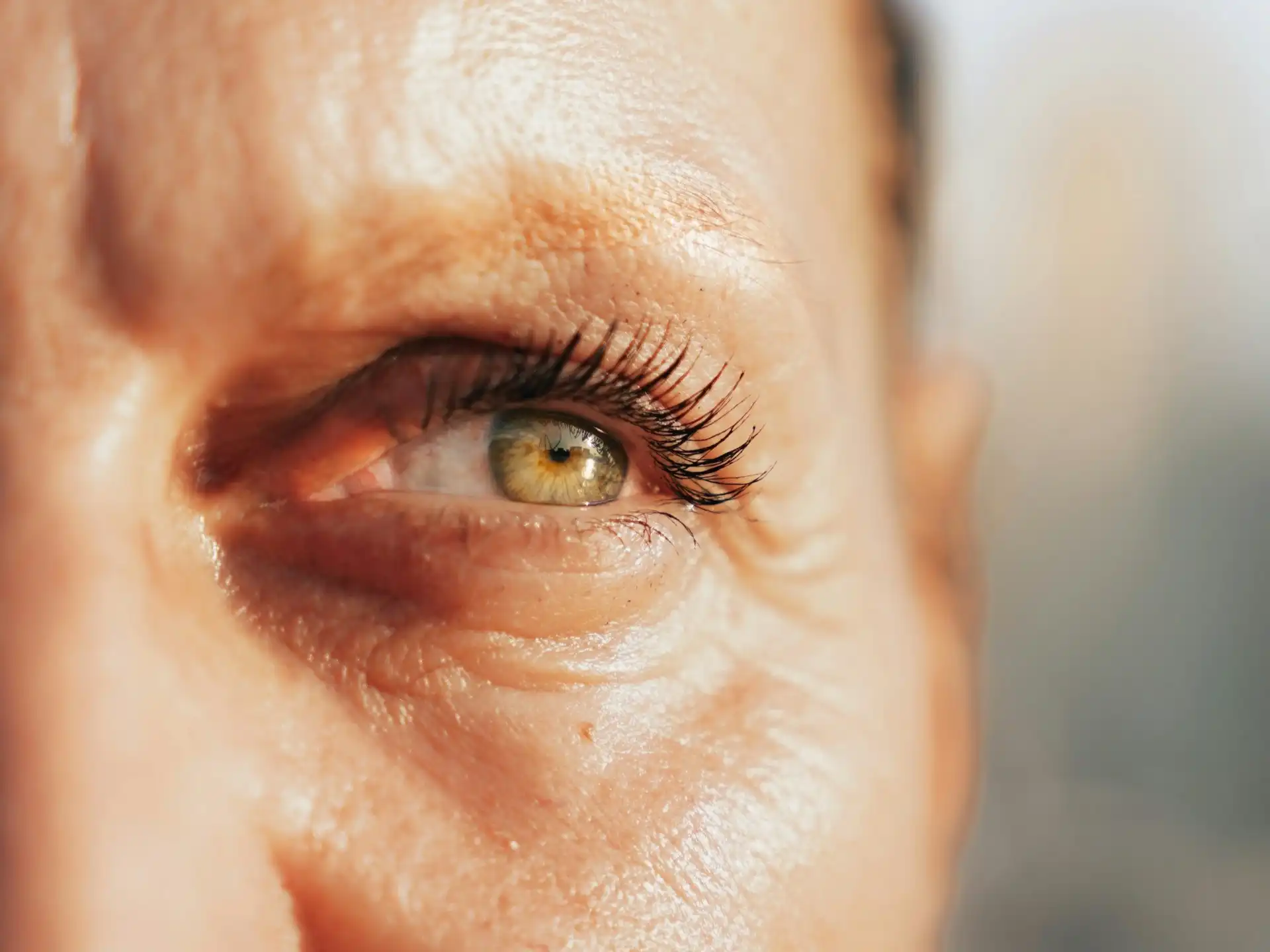
Under-eye Botox: The appointment takes a few minutes. Nothing happens immediately, since the toxin needs time to take effect, with first changes visible after three to five days and more softening by day five to ten. The full result settles at around two weeks. Results generally last three to four months, fading gradually as muscle movement returns, so this is a repeating treatment, typically three or four times a year. Recovery is minimal: small red bumps settle within an hour, mild redness fades the same day, and bruising (common given how thin the skin is here) usually clears within a few days.
Tear trough filler: Most clients return to work within 24 hours. For the first 48 hours, avoid touching the treated area, strenuous exercise, alcohol and extreme heat. Some swelling and bruising is normal and typically settles within seven to ten days, at which point results are clearly visible. Depending on your metabolism, results typically last 8 to 12 months, often longer, since the under-eye area sees less movement than most parts of the face, slowing the breakdown of the filler.
When Something Feels Off
With Botox: Sometimes relaxing part of a muscle makes untreated fibres nearby work harder, causing new bunching or creasing just outside the treated area. This settles as the Botox wears off. Some people also notice their under-eye looks more hollow after treatment; usually this is pre-existing volume loss becoming more visible once the creasing that was disguising it relaxes, rather than the Botox causing new hollowing. This is exactly why hollowing should be assessed before deciding whether Botox is the right treatment at all. Genuine upper-eyelid drooping (ptosis) is a rarer, separate complication, and if it happens, prescription eye drops can sometimes lift the lid partially while the Botox wears off naturally.
With filler: If the result looks overfilled or puffy, or if a lump persists once initial swelling has settled, this usually points to filler sitting too superficially or in slightly the wrong position. Because hyaluronic acid filler is reversible, it can be dissolved using an enzyme called hyaluronidase if you’re unhappy with the outcome, one of the key reasons hyaluronic acid fillers are used in this area rather than permanent alternatives.
Can You Combine Them?
Yes. Where lines sit alongside genuine hollowing, Botox and filler are often used together, with Botox handling the movement-related creasing and filler handling the volume loss. Which is done first, and whether both are needed at all, depends on what’s actually found at consultation. Neither treatment should be used to compensate for the other: Botox shouldn’t be used to disguise a hollow, and filler shouldn’t be used to treat a crease that only appears when you smile.
Choosing the Right Treatment
The honest answer to “which one do I need” depends on what’s actually causing your concern, not simply where on the face it sits. Ask whether what bothers you appears with movement or is there at rest. Ask whether it’s a line or a shadow. And ask your injector directly what would make them decide not to treat you with either option, since bags, festoons, loose skin and the wrong type of line should all factor into that answer.
Check that whoever treats you is a registered healthcare professional; you can verify a doctor directly on the GMC register.
A consultation with one of our specialists at botonics assesses your anatomy, muscle activity and the structure of the under-eye area to work out which treatment, or combination, actually addresses what’s bothering you, rather than assuming one option fits every case.