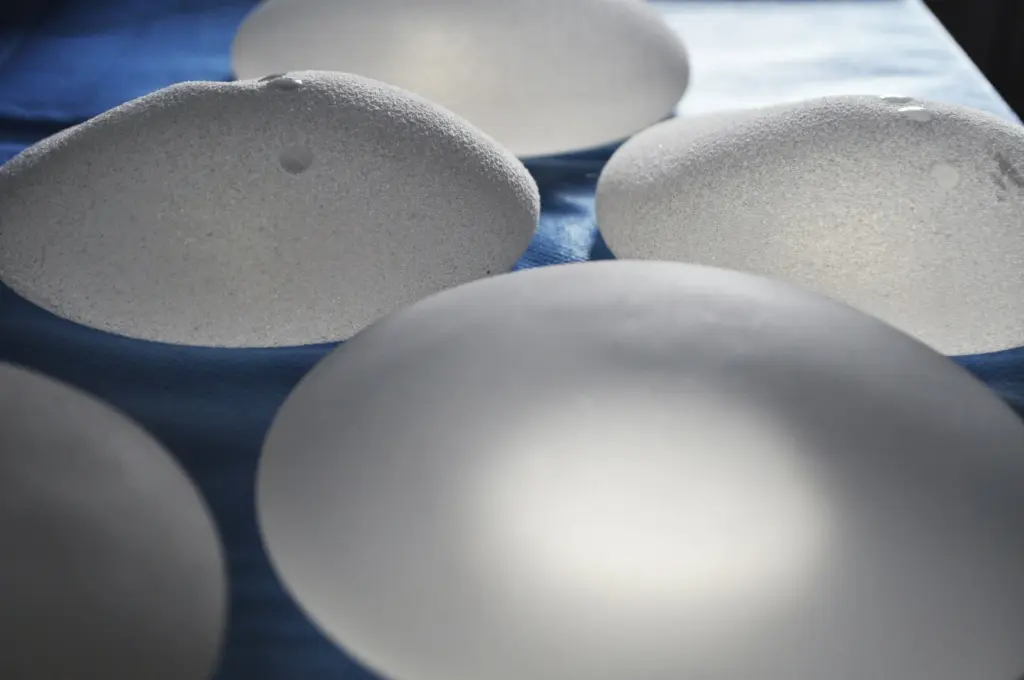
Breast implant size is measured in cubic centimetres (cc), not cup letters. Cup sizing isn’t standardised between bra manufacturers, so no cc figure translates reliably into a letter. Instead, volume, base diameter and profile work together to decide the final result, and the right combination depends on your chest measurements rather than a target cup size.
What Breast Implant Size Actually Means
Three measurements do most of the work: volume in cc, base diameter in millimetres and profile. Fill type and shape sit alongside them, and all of it has to be judged on a real chest.
Cup Sizes vs cc Measurements
A 350cc silicone implant holds 350 cubic centimetres whichever manufacturer made it. A cup letter is different. It describes how one particular bra fits, so the same person can measure differently from one brand to the next. That’s why surgeons plan breast enlargement in cc and millimetres.
How Many cc Does It Take to Go Up a Cup Size?
There’s no reliable cc-per-cup figure, because a cc is fixed and a cup letter isn’t. Band size is a big part of it. On a wider band, volume spreads across a wider footprint, so it takes more cc to change how a bra fits. On a narrower band, less volume does the same job. Existing breast tissue and how firm your skin is pull the figure around too.
So 300cc can be a modest change on one person and a dramatic one on another.
Base Diameter
Your surgeon measures the width of your breast from the cleavage line to the outer fold, and the implant’s width, its base diameter, has to sit inside that span:
- Too wide: the edges push towards the armpit or across the middle of the chest, leaving ridges you can see and feel
- Too narrow on a broad chest: there’s a gap at the cleavage and a rounded, bolted-on look
Base diameter sets the practical ceiling far more than cc does.
Profile and Shape
Profile is how far the implant stands off the chest wall, and it’s set separately from volume. A low profile spreads a given volume across a wider base with less forward projection, a high profile packs it into a narrower base and pushes it further forward, and moderate sits in between. Put two 350cc implants with different profiles on the same person and they won’t look alike.
Shape matters too:
- Round implants give even fullness across the top and bottom of the breast. Because they’re symmetrical, nothing changes if one turns in its pocket.
- Teardrop (anatomical) implants carry more volume in the lower half, with a sloped top closer to the shape of a breast at rest. The catch is rotation: a teardrop that turns in its pocket visibly distorts the shape.
Silicone, Saline and Form-Stable Implants
| Type | How It’s Filled | What It’s Like |
|---|---|---|
| Silicone gel | Cohesive gel | Moves and feels closer to breast tissue |
| Saline | Sterile saltwater, added once in place | Volume can be fine-tuned during surgery |
| Form-stable | Thicker, more cohesive gel | Holds its own shape, keeps the top of the breast full and feels firmer than standard gel |
In the UK, cohesive silicone gel implants are the standard choice, and your surgeon will explain which options suit you at consultation.
How Your Body Determines the Right Size
Before anyone mentions a number in cc, your surgeon measures the breast footprint across your chest wall. That gives a maximum base diameter, the implants that fit it make the shortlist, and volume is then chosen from that shortlist by adjusting the profile. Your anatomy picks the implant first; the conversation about cup size comes after.
Broader shoulders and a wider chest wall can carry a wider base and more volume while staying in proportion. Put the same volume on a narrow chest and it has nowhere to go but forward and outward.
Skin elasticity and existing tissue matter as much as the bones. Thin tissue over a large implant is where edges and rippling show up, whatever the frame.
Petite Frames and Narrow Chests
A narrow chest generally suits a smaller base diameter and a lower to moderate profile. Push the volume past what that base can hold and you risk the things most patients want to avoid: visible implant edges at the cleavage or outer breast, rippling you can feel through the skin, and movement that doesn’t look right.
If you’re petite and want a noticeable change, profile is the thing to adjust. A moderate-plus profile on a narrow base adds projection without widening the footprint beyond your chest.
Placement matters here too. Implants can sit above or beneath the chest muscle, and placing them beneath it is often preferred for slim women or those with little natural breast tissue, as the extra cover helps hide the implant’s edges.
If you’d prefer a subtler change without an implant, fat transfer uses your own fat to add volume instead.
Why There’s No Reliable “Average” Size
Average implant sizes quoted online aren’t a useful guide. Reliable national figures aren’t published, and even if they were, the same cc sits very differently on a 32 band than on a 38.
What a Natural-Looking Result Depends On
A natural-looking result comes down to proportion: how the implant sits against your chest width and the tissue you already have. A moderate profile matched to chest width tends to look most natural, dressed or undressed, while an implant too big for the frame shows its edges and moves less.
That’s also why photos of other patients only tell you so much, as the result in any photo is built on that person’s chest width and tissue. Visible edges or rippling aren’t a given with implants either. Whether they show comes down to tissue thickness, implant placement, fill type and the implant’s width compared with your chest.
Online calculators that promise an exact bra size after surgery can’t account for your tissue thickness, skin elasticity or how you heal. An in-person assessment gives a much closer picture, because it’s based on you.
Choosing a Size With Your Surgeon
What a Consultation Should Cover
- Chest and breast base measurements
- An assessment of tissue thickness and skin elasticity
- Questions about your work and exercise
- A discussion of the look you’re hoping for, and what’s realistic for your frame
It’s also worth checking your surgeon’s GMC registration, and that the clinic is registered with the CQC.
Setting Realistic Expectations
Reference photos are useful for showing the look you like, but they don’t work as a size request, because the person in them has a different chest width and different tissue.
There’s also a practical upper limit to how large you can go, set by chest width, tissue thickness and skin quality. Going past it raises the risk of:
- Visible edges and rippling
- Bottoming out, where the implant settles too low on the chest
- Permanent tissue stretch
Any of these can lead to revision surgery. If your surgeon says a volume is more than your base diameter can safely hold, take that as a clinical limit. A higher profile is one alternative worth asking about.
All implants also carry general risks, including rupture and capsular contracture, where scar tissue tightens around the implant. NHS guidance covers these and advises discussing implant size and shape with your surgeon before you decide.
After Surgery: How Implants Feel and Settle
Implants feel firm and sit high at first, which is why they often look bigger than you planned. They soften and drop into position as you heal. The size hasn’t changed, only the way it reads, so early comparisons will mislead you.
Breast implants also don’t last a lifetime, and are likely to need replacing at some point. Your result will shift for reasons that have nothing to do with the implant, too, as these all change the tissue over and around it:
- Weight changes
- Pregnancy
- Breastfeeding
- Ageing
That’s worth factoring into the size conversation from the start, because a volume that suits your frame now is easier to live with through those changes. If your breasts have already dropped, an implant alone may not lift them, and a breast uplift can be carried out alongside it.
Find the Right Size for You
No chart or online calculator can tell you what will suit your frame. That’s a conversation best had in person, with someone who can look at your body and the result you’re hoping for together.
At botonics, you can start with a free, no-obligation phone consultation to talk through your options, ask as many questions as you like and take your time deciding. Book your free consultation to get started.