
A Roaccutane purge usually lasts between 2 and 6 weeks, with most patients beginning to see clear improvement by the second month. If you are considering Roaccutane treatment, understanding what to expect during the early weeks can help you prepare. Timing varies with your starting dose and with how much acne you had before treatment began. How well you support your skin barrier makes a difference too.
What does a Roaccutane purge look like?
Within days of taking your first capsule, isotretinoin, a synthetic retinoid related to vitamin A, begins changing the way your sebaceous glands and skin cells function. Its full mechanism is not completely understood, although it is thought to work partly through conversion to tretinoin, also known as all-trans-retinoic acid. This binds to retinoic acid receptors and affects gene expression in sebaceous glands and keratinocytes. Early in treatment, the visible result can be what is commonly called a purge: a temporary worsening of acne as existing subsurface lesions appear more quickly.
Isotretinoin normalises keratinisation and may cause existing microcomedones to reach the surface sooner, although this process has not been fully confirmed in clinical studies. It also reduces sebum production. Cutibacterium acnes, previously known as Propionibacterium acnes, relies on components of sebum, including triglycerides, so as that environment changes the bacterium loses much of its usual food source. The precise reason for the initial flare is still not fully understood, but it may involve changes within the follicle and an inflammatory response to existing microcomedones.
Cysts, pustules, whiteheads and deeply inflamed papules can all appear during a purge. Dryness and flaking usually turn up alongside them. They belong to the same early adjustment period and are not a separate problem.
Many dermatologists suggest that purging is more likely to happen in areas where you already tend to break out, although this distinction has not been formally established in clinical studies. New breakouts in completely unfamiliar areas are worth raising with your prescriber, who can decide whether the pattern fits a typical purge or needs a different response.
When does the purge start?
Week 1 is usually more noticeable for dryness than acne changes. Lips often become chapped early, and the skin may feel tighter than usual. A dramatic flare is less common at this stage.
For many patients, the purge itself begins in week 2. Lesions already sitting beneath the skin become more inflamed, and deeper congestion starts to surface.
The peak tends to fall somewhere in weeks 2 to 4. More pustules and new cystic lesions may appear as inflammation reaches its highest point.
Some patients see early stabilisation by week 6. Fewer deep lesions develop, and existing breakouts may start resolving more quickly.
A higher starting dose can produce a faster, sharper onset. Patients who begin on a lower dose, such as 20 mg per day, often report a milder and more gradual purge than those starting on higher doses, such as 40 mg per day or 0.5 mg per kilogram per day. The purge is only one part of the treatment timeline. Skin clearing continues long after this phase has passed.
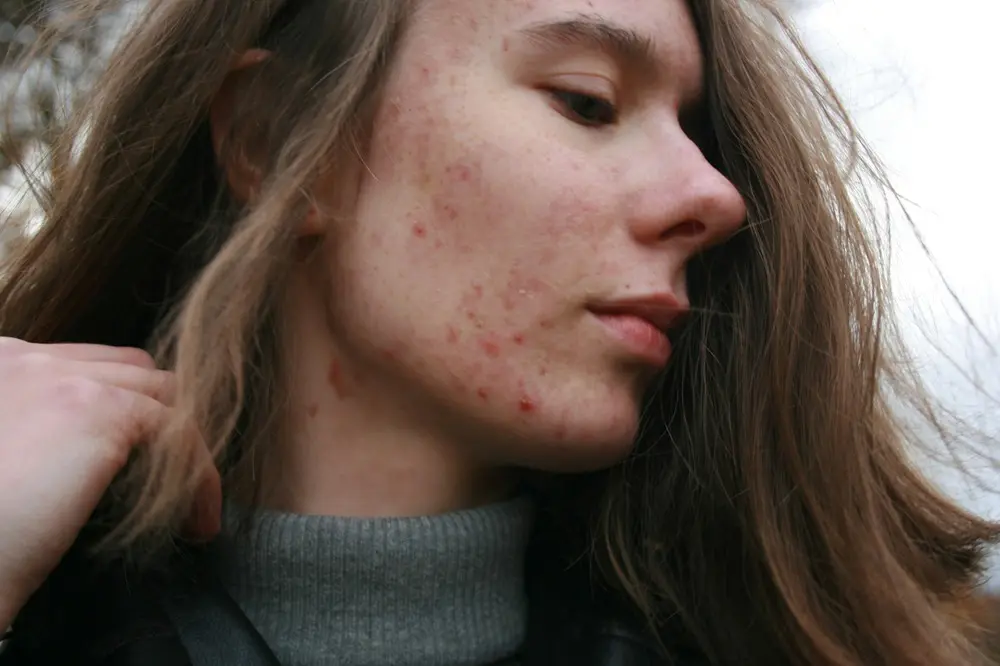
How long does the purge last?
Active purging typically lasts between 2 and 6 weeks, and many patients notice clearer improvement by month 2.
Not everyone experiences a purge. Initial worsening is a recognised side effect of isotretinoin, but some patients begin treatment without any obvious flare. Some studies suggest that around 10 to 20% of patients experience a significant initial worsening.
How long and how hard you purge often relates to how much acne is present before treatment begins. As a rough guide, someone with mild comedonal acne may purge for 1 to 2 weeks, while moderate inflammatory acne may produce a 3 to 4-week flare. Severe nodular or cystic acne may take 4 to 8 weeks to settle. Lower starting doses are generally linked with a milder adjustment period.
Whatever happens, do not stop taking isotretinoin simply to avoid the purge. Stopping and restarting may lead to another period of adjustment. The flare is temporary, and the improvement that follows is the reason for continuing treatment as prescribed.
Month 1 vs month 2: what changes?
Month 1 is often the most difficult stage. Active purging and higher inflammation can occur alongside dryness and increased sensitivity. Many prescribers intentionally begin with a lower dose during the first month to make this transition easier and reduce the severity of the flare, a practice supported by clinical experience with low-dose isotretinoin protocols.
Your dose may be increased in month 2. By that point, however, the active purge is often beginning to ease. The clearest signs of progress are smoother skin texture and fewer new lesions forming.
Complete clearing usually happens well after the purge has finished. As a general guide, many patients are mostly clear by month 3, although post-inflammatory hyperpigmentation may remain. Months 4 to 5 often bring further fading, and by month 6, many people see near-complete results. Full clearing commonly lines up with completion of the prescribed cumulative dose.
If there is no improvement at all by the end of month 2, raise it with your prescriber.
Why is the purge so bad for some patients?
Your starting dose does much of the work. Higher starting doses create faster changes inside the follicular environment, which can bring more existing lesions to the surface at once. Beginning on a lower dose gives the skin more time to adapt, which is why many prescribers use a cautious starting dose and increase it over the first few months.
Patients who already have nodular or cystic acne simply have more lesions beneath the surface before treatment starts. The more congestion there is at the beginning, the more active the purge may be and the longer it can take to settle.
A damaged or dehydrated skin barrier can make the whole process feel worse. When the barrier is compromised, inflammation may spread more easily and healing between new lesions can slow. So consistent moisturising is practical work during isotretinoin treatment. It supports the skin’s ability to recover between flares.
For patients dealing with severe cystic breakouts during the purge, some dermatologists may prescribe a short course of oral steroids such as prednisone. This can reduce inflammation and lower the risk of scarring. If the flare feels unmanageable, it is worth discussing this with your prescriber.
A more intense purge often correlates with eventual treatment success. A significant flare can suggest that isotretinoin is actively working through existing congestion. Uncomfortable, and still part of the process.
How do you know when the purge is ending?
The clearest sign is that fewer new lesions are forming, even if existing spots are still healing. You may notice that the number of fresh cysts drops from week to week. That change in pace is usually the turning point.
Existing lesions may also begin to heal more quickly. Instead of remaining swollen and active, they leave behind post-inflammatory marks. Your skin can still look uneven after the purge ends. Post-inflammatory hyperpigmentation, including red or brown marks, may remain for weeks or months. These marks indicate healing rather than active acne.
Dryness and flaking can continue throughout treatment, whether the purge has finished or not. They are side effects of isotretinoin, not reliable purge symptoms, so they will not tell you much about progress.
Week 6 is a common early turning point. For some patients, especially those who began with severe acne or a higher dose, this shift may happen closer to weeks 8 to 10. Continued improvement after the purge is expected, with full results often developing between months 3 and 6.

Is the skin better after?
Yes. Most patients achieve clear or nearly clear skin within 4 to 6 months of beginning treatment. Isotretinoin is widely regarded as the most effective acne treatment for achieving long-term remission. It works partly by shrinking sebaceous glands and significantly reducing sebum production.
After the purge, the skin may still show post-inflammatory hyperpigmentation or scarring that takes several more months to fade. The purge itself is temporary. When it is managed properly, it is less likely to lead to further scarring, although severe cystic flares may still carry some risk.
Completing the prescribed cumulative dose, in line with dermatology guidance, is an important part of achieving the long-term remission isotretinoin is intended to provide.
How to deal with the Roaccutane purge
Stop using actives. Many dermatologists recommend stopping topical retinoids and exfoliating acids during isotretinoin treatment, although individual advice can vary. Ask your prescriber which products should stay in your routine and which should be paused.
Moisturise consistently. Rich, ceramide-based moisturisers support barrier function and may help the skin cope better during the adjustment phase, potentially reducing irritation-related problems. This is doing real work, and the barrier needs the help to recover. Apply moisturiser to damp skin in the morning and evening.
Cleanse gently. Choose a fragrance-free, non-foaming cleanser and use it twice a day. Avoid products containing alcohol, fragrance, or physical exfoliants.
Wear SPF 30 or higher every morning. Isotretinoin can increase photosensitivity, as noted in prescribing information, and UV exposure may make post-purge marks more noticeable.
For severe cystic flares, speak to your prescriber about short-term oral antihistamines or a brief prednisone course to control inflammation and reduce scarring risk.
Never pick or extract. Cystic purge lesions sit deep within the skin and can be under considerable pressure. Picking greatly increases the chance of scarring. Leave them alone.
Skincare routine: what to use
Cleanser: Use a fragrance-free, non-foaming, low-pH cleanser. Apply it with your fingers and avoid cloths, brushes, or cleansing tools.
Moisturiser: Ceramide-rich or petrolatum-based products help protect the skin barrier. Apply to damp skin morning and evening.
SPF: Mineral sunscreens are often recommended for sensitised skin.
Lip balm: Lip dryness is a very common early side effect of isotretinoin and often begins within the first week or two. Use a thick balm, pure lanolin, or petrolatum, and reapply regularly throughout the day.
Avoid: Tretinoin, adapalene, benzoyl peroxide, salicylic acid, glycolic acid, physical scrubs, and alcohol-based toners.
Optional addition after the purge: Azelaic acid is one of the better-tolerated active ingredients during the later stages of isotretinoin treatment. It may help with post-inflammatory hyperpigmentation if your prescriber agrees that it is suitable for your skin at that point.
Ready to learn more?
Roaccutane is a serious medication, and it is not the right route for everyone. A consultation is where you find out whether it suits your skin, your history, and your circumstances, and what the alternatives are if it does not.
At botonics, Roaccutane is prescribed and closely monitored by our GMC-registered doctors. Book a consultation to get clear advice on your options, with no pressure to proceed.