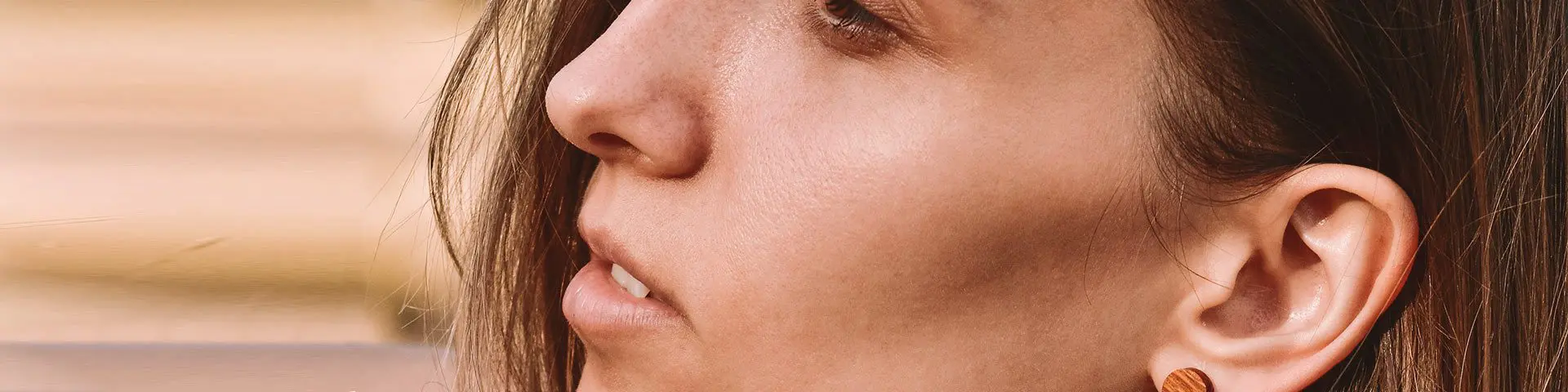

When ears sit noticeably away from the head, appear uneven, or feel out of proportion with the rest of the face, they can become a source of self-consciousness. Otoplasty is a surgical procedure used to reshape or reposition the ears, most commonly to reduce prominence or improve asymmetry. Also known as ear pinning or ear reshaping surgery, otoplasty is available through botonics at our Harley Street clinic in London.
Prominent ears are not necessarily larger than average. In many cases, they sit further away from the head because the natural folds in the ear cartilage have not developed in the usual way, or because the central part of the ear projects more than usual. Otoplasty reshapes and repositions this cartilage to bring the ears into better balance with the head and face.
Otoplasty may be used to address several concerns involving the shape, position or proportion of the ears, including:
Otoplasty may be considered for both adults and children, though in younger patients the cartilage is generally more pliable. Where non-surgical moulding is no longer an option, surgery may be considered once the ears have developed sufficiently. Timing depends on more than physical development: the surgeon will also consider whether the child understands and wants the change themselves.
Otoplasty can help with prominent or asymmetric ears caused by cartilage shape, but it is not suitable for every ear condition. Microtia and anotia, where the external ear is underdeveloped or absent, require a different and considerably more complex reconstructive approach.
The final result also depends on the existing shape and flexibility of the cartilage. Human ears are rarely perfectly symmetrical to begin with, so the aim of otoplasty is improved balance rather than identical, mirror-image ears. A small degree of asymmetry may remain after surgery.
Otoplasty works by reshaping and repositioning the cartilage that determines how the ear sits against the head. In prominent ears, this may involve recreating or strengthening the natural folds in the cartilage, reducing excess projection, or a combination of the two.
A small incision is usually made behind the ear, so the resulting scar sits in a naturally concealed position. Through this incision, the surgeon can reshape the cartilage and use internal sutures to bring the ear closer to the head. Excess skin may also be removed. Where excess cartilage contributes to the prominence, a small amount may be removed or repositioned.
For many adults and suitable older patients, otoplasty can be carried out under local anaesthetic, with sedation available where appropriate. Younger children will usually require general anaesthetic, and the most appropriate option will be discussed with you during consultation.
The procedure typically takes between one and two hours and is usually performed as a day case, so an overnight stay is not normally required.
Otoplasty may be suitable for adults and children who are concerned about prominent, asymmetric or disproportionate ears and who have realistic expectations about what surgery can achieve.
Suitability is assessed individually. Your surgeon will consider your general health, the shape and quality of the ear cartilage, your goals and any factors that could affect surgery or healing.
Factors that may need to be addressed or discussed before surgery include:
If you are not sure whether otoplasty is appropriate for you or your child, a consultation with one of our specialist surgeons at our Harley Street clinic is the place to start. The purpose of that consultation is to understand the concern, assess suitability and give you clear advice. There is no pressure to proceed.
Consultation and Planning
Your journey begins with a consultation with your botonics surgeon. They will examine your ears, discuss your concerns and explain which approach may be appropriate, including expected recovery and what surgery can realistically achieve.
Preparation
On the day of surgery, the ears are marked and the appropriate anaesthetic is administered. Many adult procedures can be performed under local anaesthetic, with sedation available where suitable. General anaesthetic may be recommended for younger patients.
The Procedure
A small incision is usually made behind the ear. The surgeon reshapes and repositions the cartilage using carefully placed sutures, with excess cartilage or skin removed where necessary. The procedure typically takes one to two hours.
Recovery and Aftercare
A protective dressing is placed around the head to support the ears as they heal. Most patients go home the same day, and follow-up appointments are arranged to monitor recovery.
Recovery after otoplasty happens in stages, and the exact timing varies from person to person. Swelling, tenderness and changes in sensation are expected during the early healing period.
The ears may continue to feel firm, stiff or slightly numb for several months. Results are generally long-lasting, although a small number of patients may experience some loss of correction over time and occasionally require revision surgery.
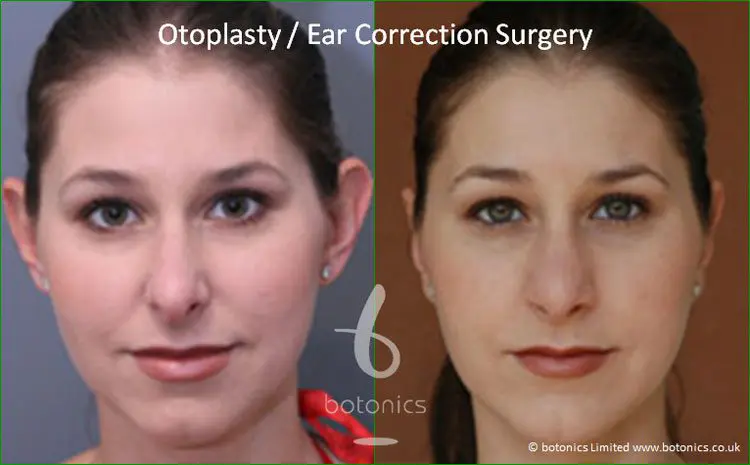
Otoplasty · Local anaesthetic
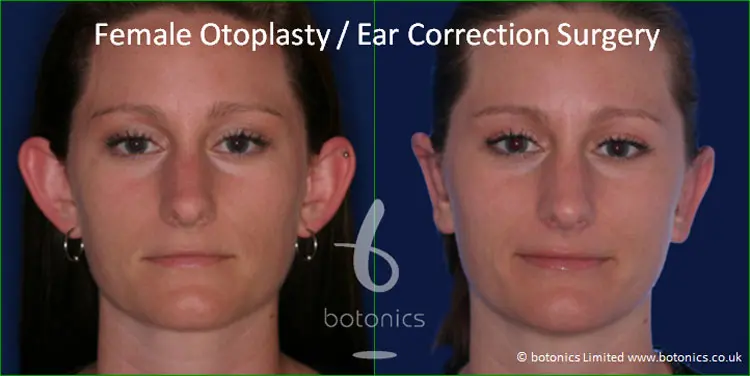
Bilateral otoplasty · Local anaesthetic
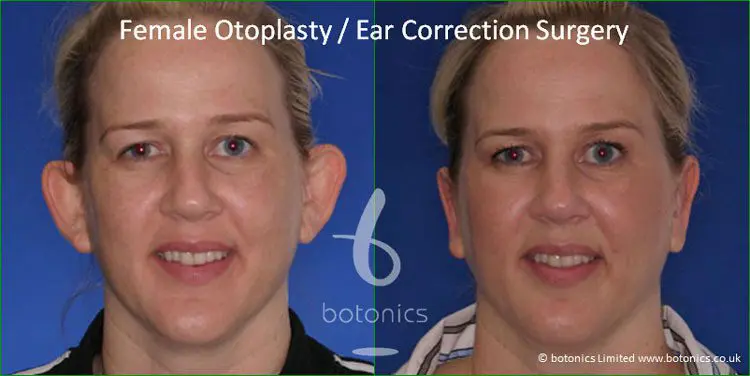
Bilateral otoplasty · Local anaesthetic
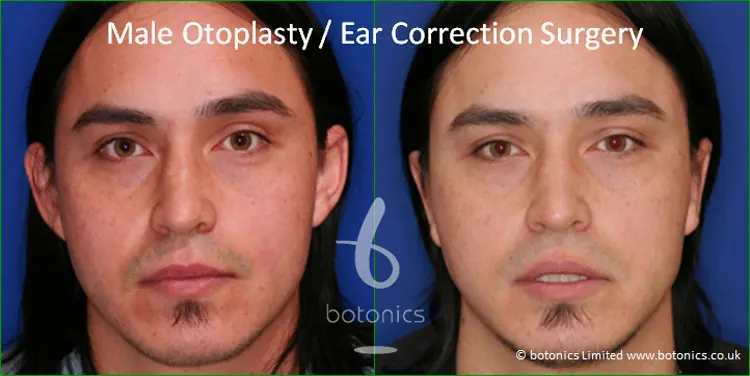
Bilateral otoplasty · Local anaesthetic
View more Otoplasty before and after case studies.
What patients say
Every single botonics staff member involved in my procedure, from the surgeons to those who helped me in both my preparation and recovery from the surgery itself, were absolutely outstanding. They helped…
Patient review
My ears have been prominent since childhood so I had a bilateral otoplasty at the end of September. Firstly I filled in my details online and was called the same day by…
Patient review
I had visited a few surgeons regarding my procedure and finally decided to have my procedure completed at Botonics mainly because of the starightforward approach they apply for booking appointments and quoting…
Patient review
I had my ears pinned back under local anaesthetic.I must admit I was a bit nervous before surgery but on the day of surgery the friendliness and professionalism of the surgeon and…
Patient review
Read all 4 Otoplasty: Ear Reshaping and Correction Surgery London reviews
Every surgical procedure carries risks. Your surgeon will explain these carefully during your consultation so that you can make an informed decision about whether otoplasty is right for you.
Rated 5 out of 5 by 4 Otoplasty: Ear Reshaping and Correction Surgery London patients Read all reviews
Treatment Summary
Procedure time
1 - 2 hours
Anaesthetic
Local or Sedation
Hospital stay
N/A
Sensitivity period
7 days
Back to work
7 days
Duration of results
Permanent
Risks & complications
Asymmetry, bleeding, swelling.
Location
Your Specialist(s)
Next step
Ready to take the next step? Book a consultation with one of our specialist surgeons at our Harley Street clinic to find out whether otoplasty is right for you. Your consultation will confirm the full cost based on our published pricing.
Book a ConsultationOr call +44 (0) 20 800 400 30
Common questions
Otoplasty can often be performed under local anaesthetic in adults and suitable older patients, which numbs the treatment area during surgery. Some soreness, swelling and tenderness are normal afterwards and can usually be managed with the pain relief recommended by your surgeon.
Otoplasty is commonly considered from around five years of age, once the ears have developed sufficiently. Timing is individual, particularly for children. The surgeon will consider physical development as well as whether the child understands the procedure and wants the change themselves.
Otoplasty is designed to provide a long-lasting change in the position or shape of the ears. Once the cartilage has healed in its new position, the correction usually remains stable. A minority of patients can experience some return of prominence or loss of correction over time, and revision surgery is occasionally required.
The incision is normally made behind the ear, placing the scar in a naturally concealed area. Scars usually become less noticeable as they mature, although no surgical scar can be guaranteed to become invisible. Some people are also more prone to raised or thickened scarring than others.
Yes. Otoplasty can be performed under local or general anaesthetic depending on the patient, age and surgical plan. Local anaesthetic is commonly suitable for adults and cooperative older patients, while general anaesthetic is usually more appropriate for younger children. Sedation may also be available in some cases. Your surgeon will recommend the most appropriate option during consultation.
Many patients return to desk-based work within one to two weeks, although this depends on swelling, tenderness, the type of work you do and how your recovery progresses. Activities that could knock, bend or place pressure on the ears need to be avoided for longer. Your surgeon will advise when it is appropriate to resume exercise, swimming and contact sports.
Sign up to our Newsletter receive regular updates

Explore Treatments
© botonics Plastic Surgery Group 2005 - 2026. All Rights Reserved.
Accreditations


