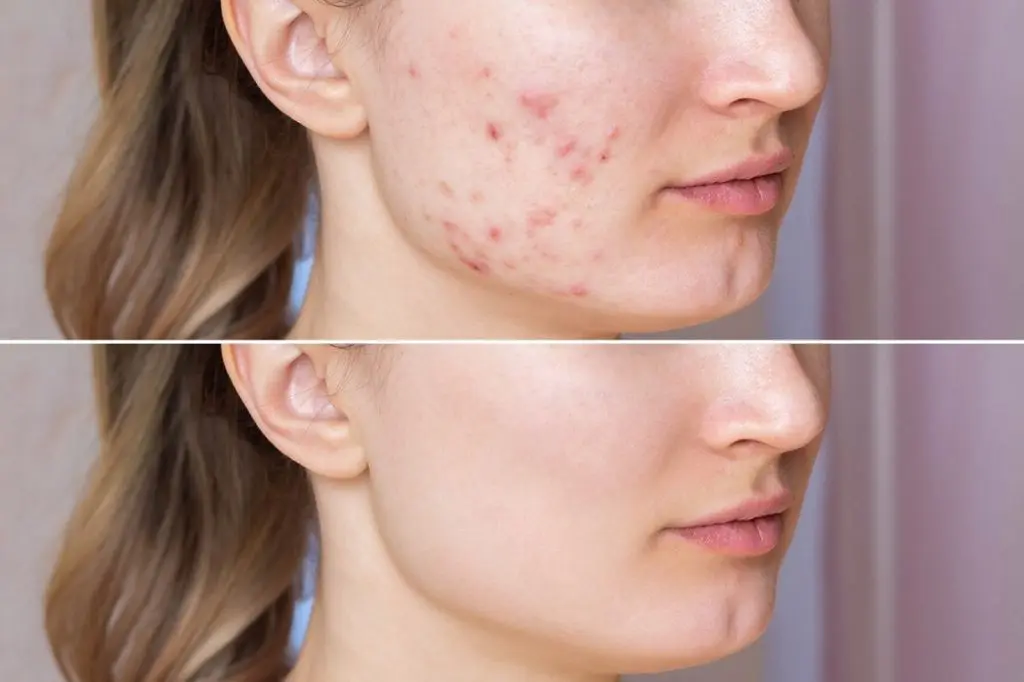
Chronic acne that won’t quit, no matter what you’ve tried? Chances are you’ve come across Roaccutane, also known as isotretinoin. It’s an acne treatment that has helped a great many people finally get the clearer skin they’ve been chasing.
So how does it actually work, and is it right for you? This guide gives you the groundwork before you sit down with your dermatologist.
What is Roaccutane?
Roaccutane is a brand name for isotretinoin, a prescription medication for severe acne. It’s usually considered once other treatments haven’t worked. A retinoid derived from vitamin A, it’s known for being highly effective at clearing breakouts.
How does Roaccutane work?
Start with what causes the breakouts in the first place.
Just below the skin’s surface sit sebaceous glands, connected to the hair follicles. They produce sebum, a natural oil that keeps skin and hair from drying out.
With acne, those glands produce too much sebum. The excess oil mixes with dead skin cells and blocks the follicles. Bacteria build up inside the blockage, and inflammation, redness and painful spots follow. Enough of these spots, and that’s acne.
Roaccutane interrupts the process at the source. It shrinks the sebaceous glands and reduces their activity, so less sebum reaches the follicles. Less oil means less favourable conditions for the bacteria. It also carries anti-inflammatory properties, which help settle redness and swelling.
What Dose of Roaccutane Will I Take?
Your dermatologist will calculate your dose based on your body weight, with a typical range of 0.5 mg/kg/day to 1 mg/kg/day. This may be adjusted depending on how well you respond to the medication and how well you tolerate it.
For people who experience significant side effects on a standard dose, low-dose or micro-dose protocols may be available. These involve taking a smaller daily amount over a longer period, which can be easier for some patients to manage.
The total cumulative dose over the full course can also affect how long remission lasts once treatment ends. Strength and duration both matter. Worth discussing your dosing plan with your dermatologist before you start.
What Monitoring Do I Need During Roaccutane Treatment?
Before starting, your dermatologist will arrange a baseline blood test covering liver enzymes, including ALT and AST, cholesterol and triglycerides. Women of childbearing age will also need a pregnancy test first.
Once treatment begins, blood tests are repeated monthly as standard. Roaccutane can raise liver enzymes and lipids, so regular monitoring lets your doctor catch changes early and adjust the dose if needed.
All of this is routine and your dermatologist will walk you through what’s required at each stage.
Why is Roaccutane prescribed, and who can benefit?
Many people suffer from acne, so why isn’t Roaccutane or Isotretinoin treatment prescribed to all these people? It’s because it comes with some side effects and potential complications that are best avoided.
However, if teenagers and adults have severe acne that has not responded to other treatments, then it may be prescribed by a dermatologist. They are most likely to get the most out of the treatment in spite of the side effects compared to those who’s spots are reduced by alternatives.
What are the benefits of Roaccutane?
A wide range of improvements are associated with Isotretinoin treatment. The main ones:
Reduces acne breakouts
The main use and benefit of Roaccutane is that it treats severe acne and reduces the chance of any more breakouts occurring. It is best for types like cystic and nodular acne, especially when no other acne treatments or alternatives have worked.
Roaccutane works by reducing the size of the sebaceous glands below the skin and reducing how much sebum it secretes. This gets rid of the main cause of acne, and therefore, there are fewer spots on the skin as a result. Often, taking Roaccutane or Isotretinoin capsules will lead to a permanent reduction in acne breakouts or at least a significant decrease.
Prevents scarring on the skin
Anyone who’s dealt with acne scarring knows how it can chip away at confidence, and how hard it is to treat once it’s set in. Roaccutane reduces the number, size and severity of acne lesions. By controlling active acne, it helps prevent further scarring.
Scars tend to form when inflammatory acne damages the skin as it heals, particularly if spots are picked or broken open. Less inflammation and fewer active lesions mean fewer new scars.
Lowers the chances of hyperpigmentation
Post-inflammatory hyperpigmentation, the dark marks acne can leave behind, is another common concern and is often more visible on darker skin tones. It is not the same as scarring, but it can still affect how people feel about their skin.
Less inflammation and better-controlled acne mean fewer of these marks. The result is a more even-looking skin tone as the acne clears.
Enhances the skin
Clearer, less oily skin tends to be one of the first things people notice. Instead of managing frequent breakouts, patients often see smoother-looking skin as inflammation settles and new spots become rarer.
Roaccutane also helps normalise how skin cells shed within the follicles. This means fewer blocked pores and better texture. As active acne comes under control, skin can look clearer, calmer and more even.
Who shouldn’t take Roaccutane?
Roaccutane isn’t suitable for everyone. Anyone pregnant or breastfeeding should not take it. The risk to an unborn or nursing child is serious enough that patients are advised to avoid pregnancy throughout treatment altogether.
Other groups who should not take Roaccutane include:
- Those suffering from mental illness
- People with liver or kidney disease
- Those who have high cholesterol
- Individuals with high vitamin A levels
- People with Crohn’s disease or ulcerative colitis
- Those who are allergic to isotretinoin
Circumstances vary, so anyone with one of these conditions should talk it through with the prescribing dermatologist, who can weigh the risks and decide whether Roaccutane is appropriate.
How long does Roaccutane take to work?
Severe acne makes you want results fast. Knowing what to expect, and when, helps you stay the course.
In the first two to four weeks, your skin may start to shift, although not always in the way you’d hoped. Some people see an initial flare, where acne looks temporarily worse before it improves. That’s the skin adjusting, not a sign the treatment is failing.
Meaningful improvement usually shows by weeks six to eight for most people taking Roaccutane, as sebum production drops and breakouts thin out. From there, the skin tends to keep clearing steadily.
A full course runs around four to six months, depending on your doctor’s advice. Most people finish with completely clear skin, and for many, the improvement holds long-term or permanently.
Skin looking worse in the early weeks? Talk to your dermatologist for reassurance rather than stopping on your own.
Does Roaccutane Cure Acne Permanently?
For many patients, one course delivers lasting clearance. Around 80 percent see results that hold, which is part of why it’s considered one of the most effective treatments for severe acne.
Some see acne return after the first course. A second course, usually at a lower dose, may be recommended. This is fairly common and reflects how individual factors shape the skin’s long-term response.
Age is one of the biggest of those factors. Younger patients, teenagers especially, with hormones still in flux, face a higher chance of recurrence than older patients. The original severity matters too. More severe cases may need further treatment to hold the result. Worried about relapse? Your dermatologist can assess your situation and advise accordingly.
What are the possible side effects of Roaccutane?
Dermatologists are careful when prescribing Roaccutane precisely because of its potential side effects. Not everyone experiences problems, but the following may occur:
- The most common side effect is dryness of the skin, lips, eyes and nasal passages.
- You may experience increased sensitivity to sunlight, making your skin more likely to burn.
- Roaccutane has been known to elevate cholesterol, which increases your chance of stroke and heart disease.
- The treatment has been known to cause changes in liver function.
- You might experience changes in mood, including feelings of depression or anxiety.
- If you have inflammatory bowel disease, Roaccutane might exacerbate the condition.
- You may experience aches and pains in your joints and muscles, particularly after exercise.
- You could develop dry eyes, which may affect your night vision.
- Although it reduces acne, Roaccutane might lead to other skin conditions, such as eczema.
- There are serious pregnancy risks associated with Roaccutane, as it can cause severe birth defects or miscarriage.
- You might experience an allergic reaction if you have an allergy to Isotretinoin or any other ingredients in the capsules.
- There’s a small chance you might experience changes in your blood sugar levels.
Frequently Asked Questions
Can I Drink Alcohol While Taking Roaccutane?
Best avoided during treatment. Roaccutane already affects liver function, and alcohol adds further strain on top.
Your dermatologist will typically advise cutting it out altogether to protect your liver throughout, even if the occasional drink might not cause immediate harm.
What Skincare Should I Use During Roaccutane Treatment?
Keep it simple and gentle. Fragrance-free, hydrating cleansers and moisturisers are ideal, as dryness is the side effect you’ll notice most.
A broad-spectrum SPF 50 every morning is non-negotiable, since Roaccutane raises your skin’s sensitivity to sunlight. Skip exfoliating acids and anything likely to irritate already sensitised skin.
Can I Have Laser or Waxing Treatments While Taking Roaccutane?
No. Skin becomes significantly more fragile during treatment, which makes laser resurfacing, IPL and waxing unsafe. Burns, wounds and scarring are all real risks.
Most practitioners ask you to finish your course and wait, often several months, before these treatments.
Is Roaccutane Only Prescribed for Severe Acne?
Mainly, yes. It is reserved for severe acne that hasn’t responded to other treatments. A dermatologist may also consider it for persistent moderate acne that keeps returning despite courses of antibiotics or topical treatments.
Your prescriber will review your full treatment history first.
Can Men Take Roaccutane?
Yes. It is equally effective in men and women. The pregnancy-related restrictions don’t apply to male patients, though the same liver monitoring, cholesterol checks and mood precautions apply across the board.
Find Out If Roaccutane Is Right for You
Roaccutane is a highly effective treatment for severe acne, working by reducing sebum production beneath the skin’s surface. It also lowers inflammation and reduces the likelihood of further scarring and hyperpigmentation.
That said, it isn’t suitable for everyone, and it must be taken with the right precautions and under specialist supervision.
To find out whether Roaccutane may be suitable for you, speak to the specialists at botonics.
Get in touch, and we’ll help you understand your options.